


Colorado Scenic Byways Map
Frontier Pathways Scenic Byway
In the 1840's, easterners made their way across the Appalachian Mountains to settle in the West; ranches, farmsteads, trading posts, and stage stops established the culture of the West. The Frontier Pathway boasts a rich history of the early years of Colorado. As you travel along the byway, you can experience some of the joy and sorrow that people of the 1800s also encountered.
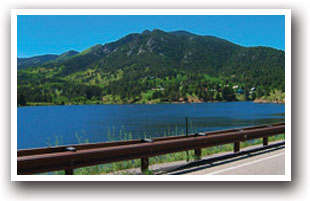
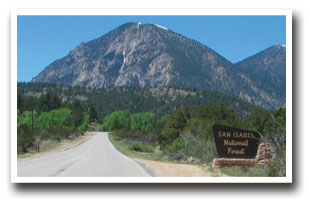
Some of the joys from the 1800s still exist today in the scenery. The pastoral scene along the byway includes the 100-mile long Sangre de Cristo mountain range. Also, along the pathway are sharp mesas, hogbacks, the Hardscrabble Canyon, and the Arkansas River. Within the San Isabel National Forest are the Wet Mountains and Greenhorn Valley. Escape from it all and see diverse wildlife, plants, and scenery.
Be sure to visit the Bishop Castle, built in 1969 entirely with a wheel barrel and shovel. The town of Rosita is also along the byway; this old ghost town has buildings dating as far back as the 1800s. Visit the Westcliff School House, built in 1891; to this day, no one is sure why there is no 'e' at the end of Westcliffe in the school's name.
If activity is more your style, try mountain biking on Greenhorn Mountain. There is also fishing available in the Arkansas River and Lake San Isabel, backpacking, and hiking. In the winter, you can snowmobile, ice fish, and cross-country ski. Along parts of the byway are also 4 foot paved shoulders for bicyclers to travel on the byway.
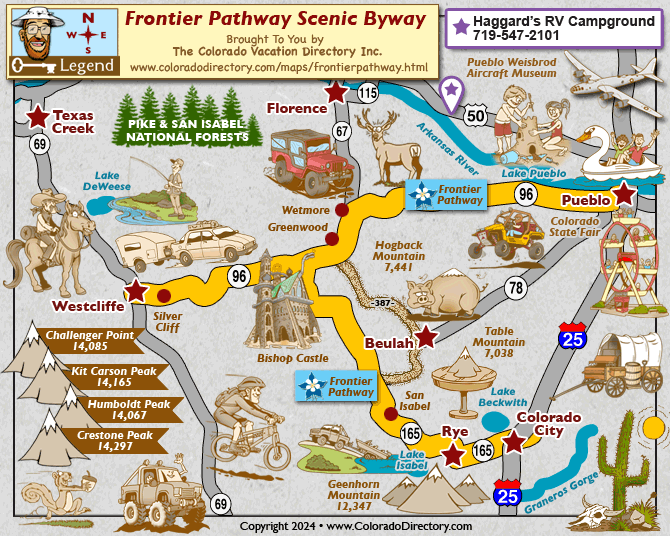
Location: Starting in Pueblo, take Highway 96 east and end in Westcliffe. Or you could turn south onto Highway 165 and end in Colorado City traveling through the San Isabel area.
Places to Stay & Fun Things to Do


Stay in the picturesque Wet Mountain Valley. Dark Sky Suites in Westcliffe offers spacious King suites with kitchenettes, air conditioning, dining space, good WiFi. STARGAZE NIGHTLY. SLEEP DEEPLY.
Haggard's has an outdoor swimming pool, hot showers, WiFi, game room, playground, mountain views. RV campground between Pueblo and Cañon City on US 50. BIG RIG friendly: full hookups and pull-thrus.
Built for Wheelchair Access, views of Table Mountain. Vacation Lodge Home in Greenhorn Valley; along Colorado's Bird Trail. 30 minutes to Pueblo; a mile off Hwy 165 in Rye. Year round fun with less crowds.
More Activities & Information
Greenhorn Valley, Colorado includes: Beulah, Colorado City, Lake San Isabel, Rye, San Isabel
Pueblo, Colorado includes: Pueblo West
Westcliffe, Colorado includes: Rosita, Silver Cliff
Scenic Byways in Colorado





 Cabins/Glamping
 Motels & Hotels
 Lodges
 Vacation Homes
 Condos & Suites
 Bed & Breakfast
 Tent Camping
 RV Parks
 RV Sales & Rentals
 Romance Packages
 Family Friendly
 Pets Welcome
 By Water Rentals
 Swimming Pools
 Guest Horses
 Groups/Reunions
 Weddings & Elope
 Winter Lodging
 Downloads
 Colorado Maps
 Events
 National Parks
 Scenic Byways
 Fishing
 Hot Springs
 Horse Riding
 ATV/UTVing
 Jeeping & 4WD
 Rafting/Kayaking
 Attractions
 Golfing
 Restaurants
 More Fun Stuff
 Hunting
 Snowmobiling
 Skiing/Boarding
 Snowshoeing
 Cross-Country Ski